Native activity
- Smart Lists, sequences, campaigns, agent conversations, and inbox activity contribute context.
- Internal sources are always on.
- Source records stay inspectable from each profile.
Company Brain · Beta
Company Brain connects the people, companies, conversations and activity already flowing through your business. Find the context behind a contact, see who is engaged, and go into your next conversation prepared.
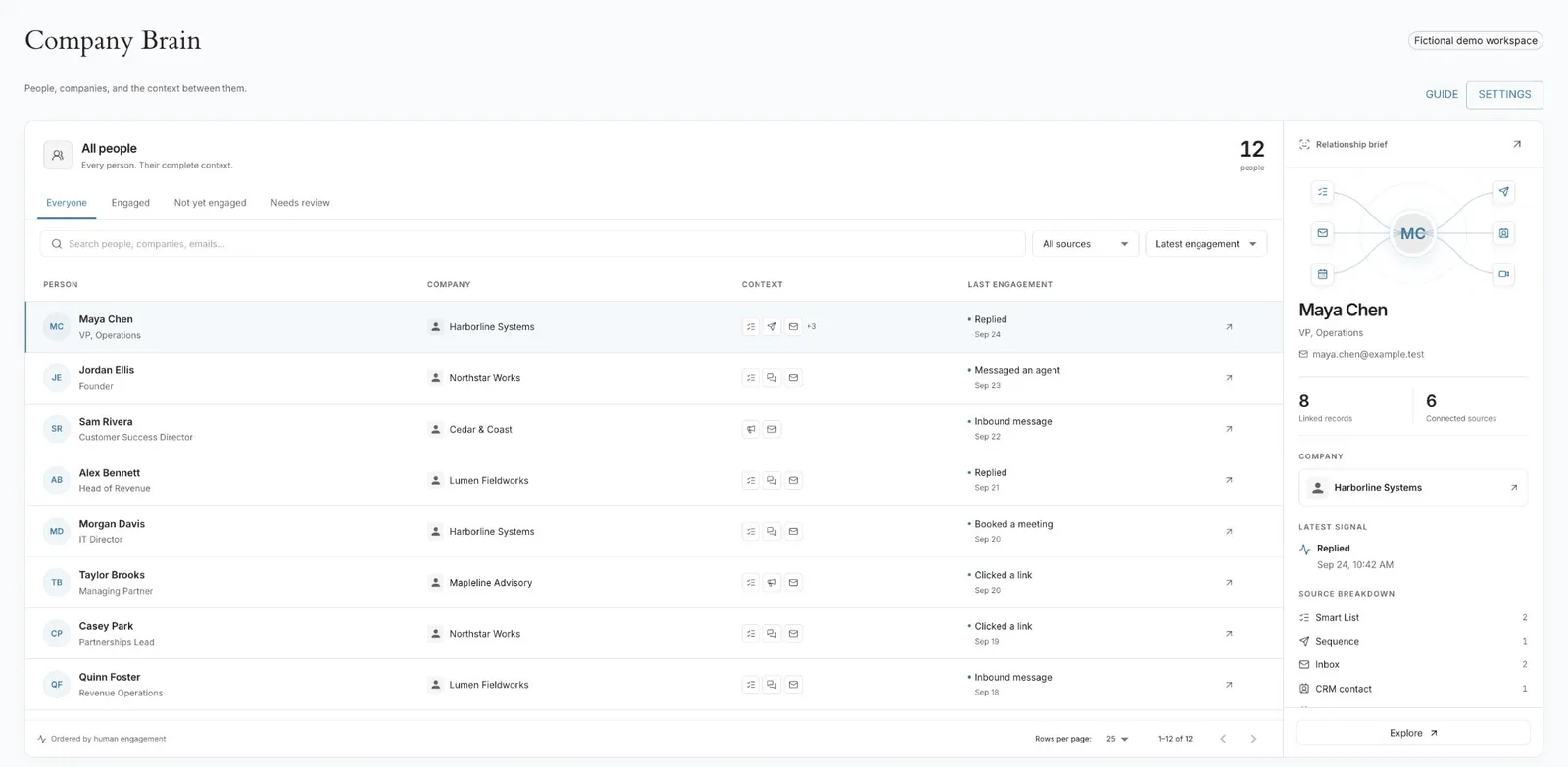
Connected profiles
Search by name, company, email, or phone. Open a relationship brief or a full profile to see contact details, company context, and the records behind the relationship.
Prioritize human replies, inbound messages, agent conversations, and bot-filtered sequence clicks and bookings.
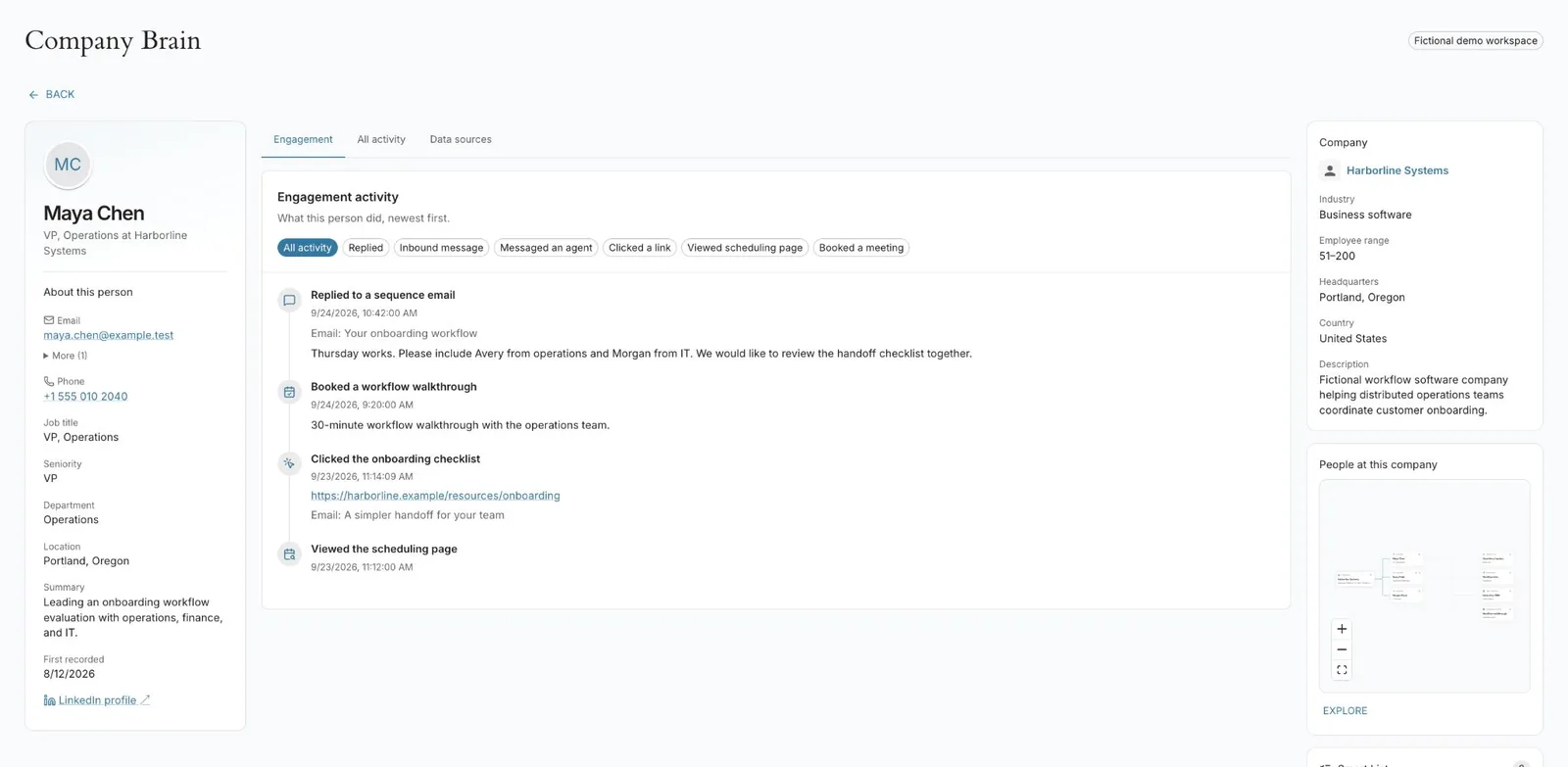
Inspect the detailed sequence timeline, including opens, clicks, scheduling events, completed calls, and status changes.
Follow linked source records to understand where your team knows someone from.
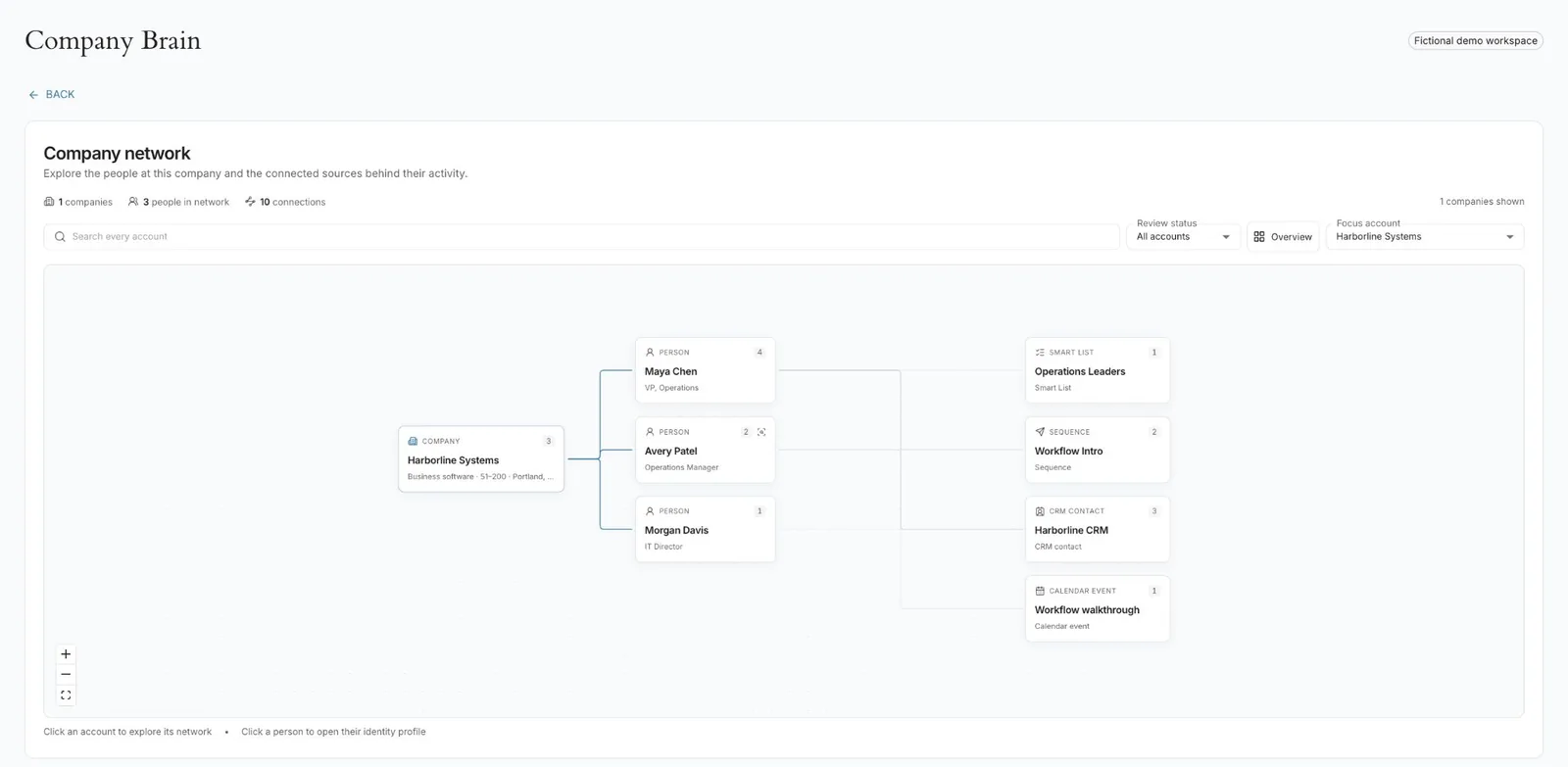
Company networks
Open a company from the directory or a person’s profile to explore the people and sources connected to that business.
Review the latest interaction and the other people involved at the account.
Help the next teammate follow the source evidence and conversation history.
Start with recent human engagement, then inspect the actual interaction before taking action.
Identity review
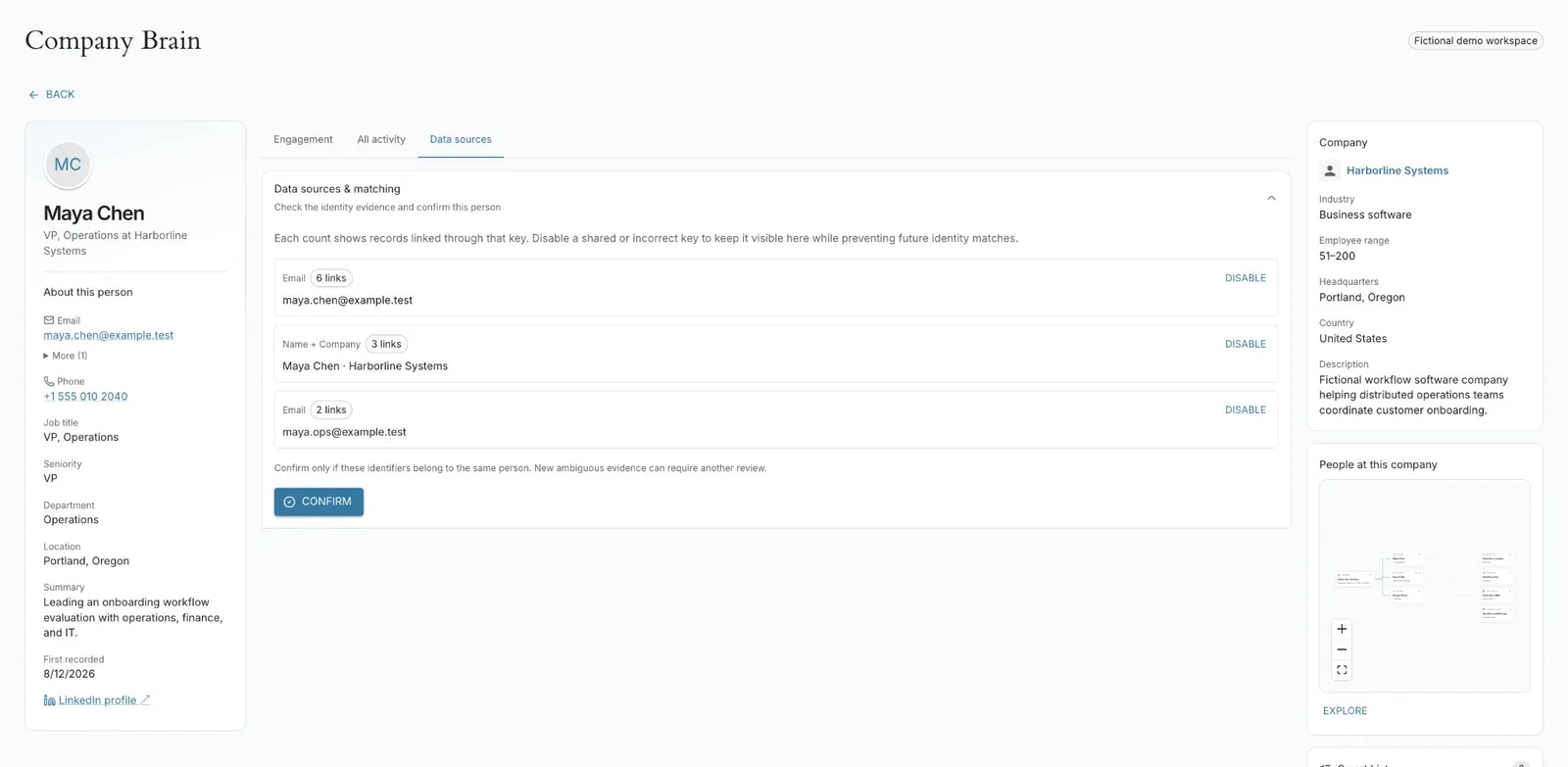
When identifiers are ambiguous, Company Brain makes the evidence visible so you can review how records were connected.
Find uncertain identity matches from the directory.
Review matching identifiers and the records linked through them.
Disable an incorrect shared matching key and confirm the review. New ambiguity can be flagged again.
Connected sources
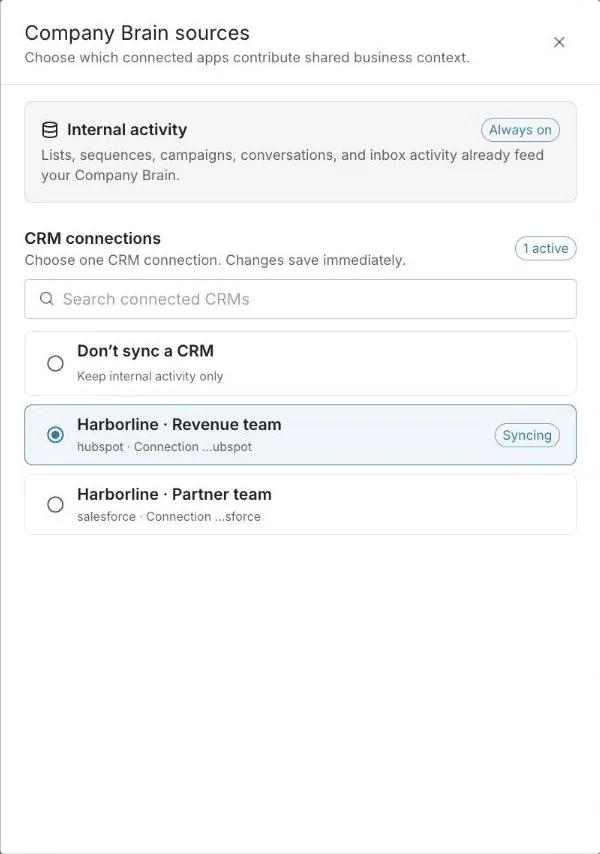
Three kinds of sources feed Company Brain. Internal activity is always on; the rest you switch on when you want it.
Get started
Company Brain lives in the workspace you already use. Most teams connect a source in under ten minutes and see their first resolved relationships the same day.
See how Company Brain fits the platformSign in to Zrevick and select the company you want to work in. In the sidebar, expand Find & Enrich and select Company Brain.
The setup guide introduces the graph and your sources. Reopen it from the question-mark icon beside the Company Brain action row. Choose Explore to enter the directory.
Open Settings → Sources. Internal activity is always on. If you want CRM data, choose the relevant connection under CRM connections; your selection saves immediately. You can select one CRM connection at a time.
If none appears, go to your company’s Settings → Integrations, connect a supported CRM, and return to Company Brain. Back in Company Brain → Settings, use Sync now to queue a people sync. Allow processing time before expecting imported records to appear.
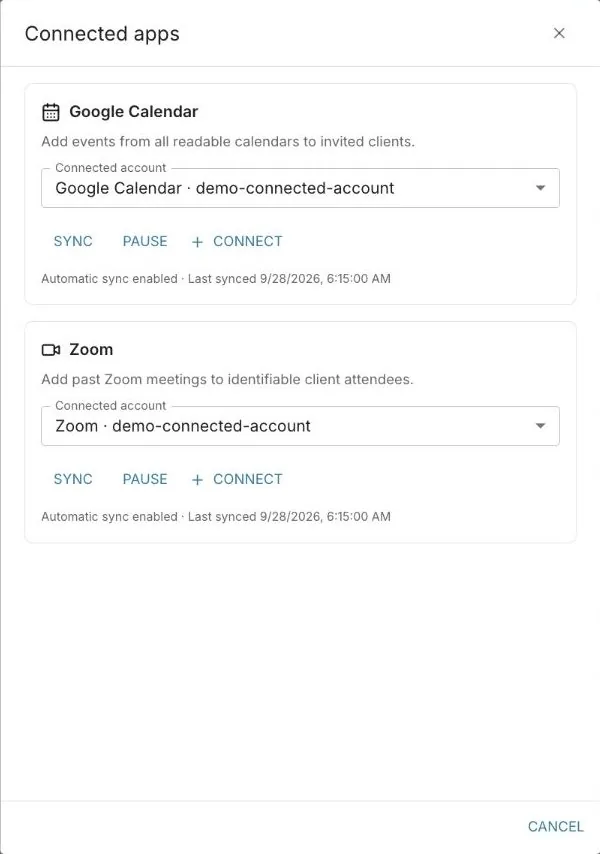
Open Settings → Activity sync → Configure. In Connected apps, select a Google Calendar or Zoom account. Use Connect if you need to add one, then Enable to turn on its sync.
Once enabled, the card shows Sync, Pause, and the last sync time. Use these controls to refresh or pause the connection. Matching depends on the attendee information the app supplies; not every meeting will identify a client.
Pick an account you are actively speaking with. Find the latest reply, identify the other people at that company, and review the sources behind the relationship. You now have a concrete starting point for your next conversation.
A few things to know
No. Internal Zrevick sources already contribute. Add a supported CRM when you want to bring its people and company data into the picture.
No. The directory prioritizes human engagement. Sends and opens do not rank as engagement; detailed sequence tracking, including opens, appears in All activity.
No. Synced meeting records and custom activities are separate from the sequence tracking stream in All activity. Meeting matching also depends on the attendee information available from your connected account.
Company Brain makes the evidence visible. Review the matching identifiers and the records linked through them, disable an incorrect shared matching key, and confirm the review. New ambiguity can be flagged again.