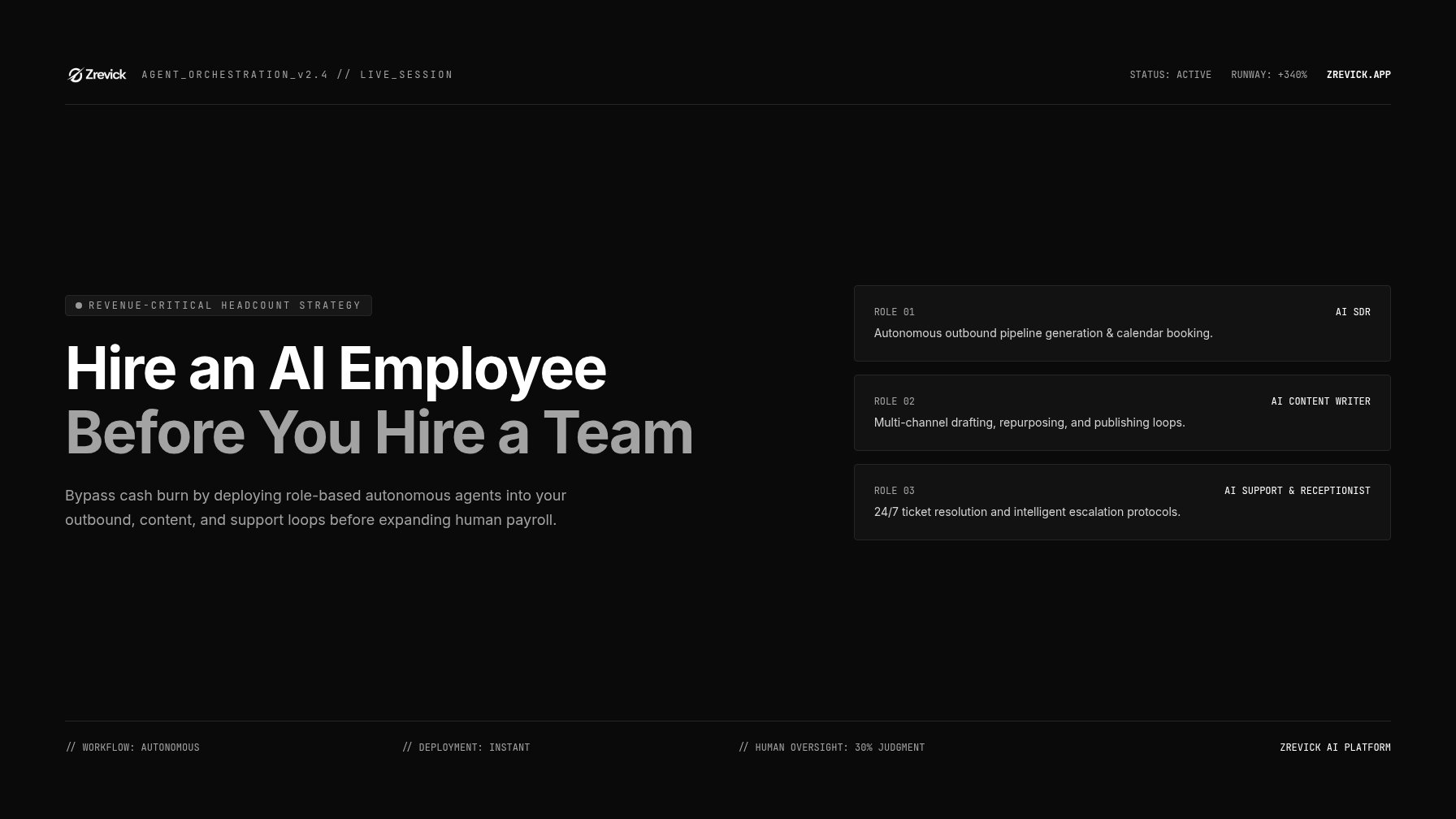
Hire an AI Employee Before You Hire a Team
An AI employee can run sales, content, and support before you hire a single person. Org chart, onboarding checklist, metrics, and honest cost math.
Read the articleTopic
Every Zrevick article tagged AI Employees — how founders turn AI-built products into companies that sell, market and support at scale.
An AI employee is not a tool you open when you remember it exists — it is a standing role with a job description, working hours and a manager. These articles show how to scope the first role (most teams start with an SDR or a support agent), onboard it with your positioning, docs and tone, and decide what it may do without asking. From there: the metrics that tell you the role is working, the point at which a second agent makes sense, and the fully loaded cost math compared with a contractor or a hire. You will also find the uncomfortable truths — agents need editing time, oversight is a permanent line item, and output quality is your responsibility. Useful reading before your next headcount request. The best first role is the one with the clearest definition of done — research that ends in a scored list, outreach that ends in booked meetings, or support that ends in a resolved ticket. Measure the outcome, not the activity, and expand to a second agent only after the first one earns its keep for a full quarter. Start where the work is measurable and repetitive; the roles that require taste and negotiation come last, if ever.
Every article in this section is written for the same reader: a technical founder running sales, marketing and support with a team of one to ten, usually while Claude Code or Codex ships the product. New guides are filed under their topic as they publish, so this page grows rather than ages. If you are mid-decision, start with the most recent article; if you are new to the topic, start with the overview and work forward. Skim the summaries first, then commit to the pieces that match the workflow you are fixing this quarter.